
How On-Demand Printing Is Transforming the Promotional Product Industry in Australia
Discover how on-demand printing is reshaping branded merchandise for Australian businesses, schools, and events — and what it means for your next order.

Written by
Katarina Pavlov
Industry Trends & Stats
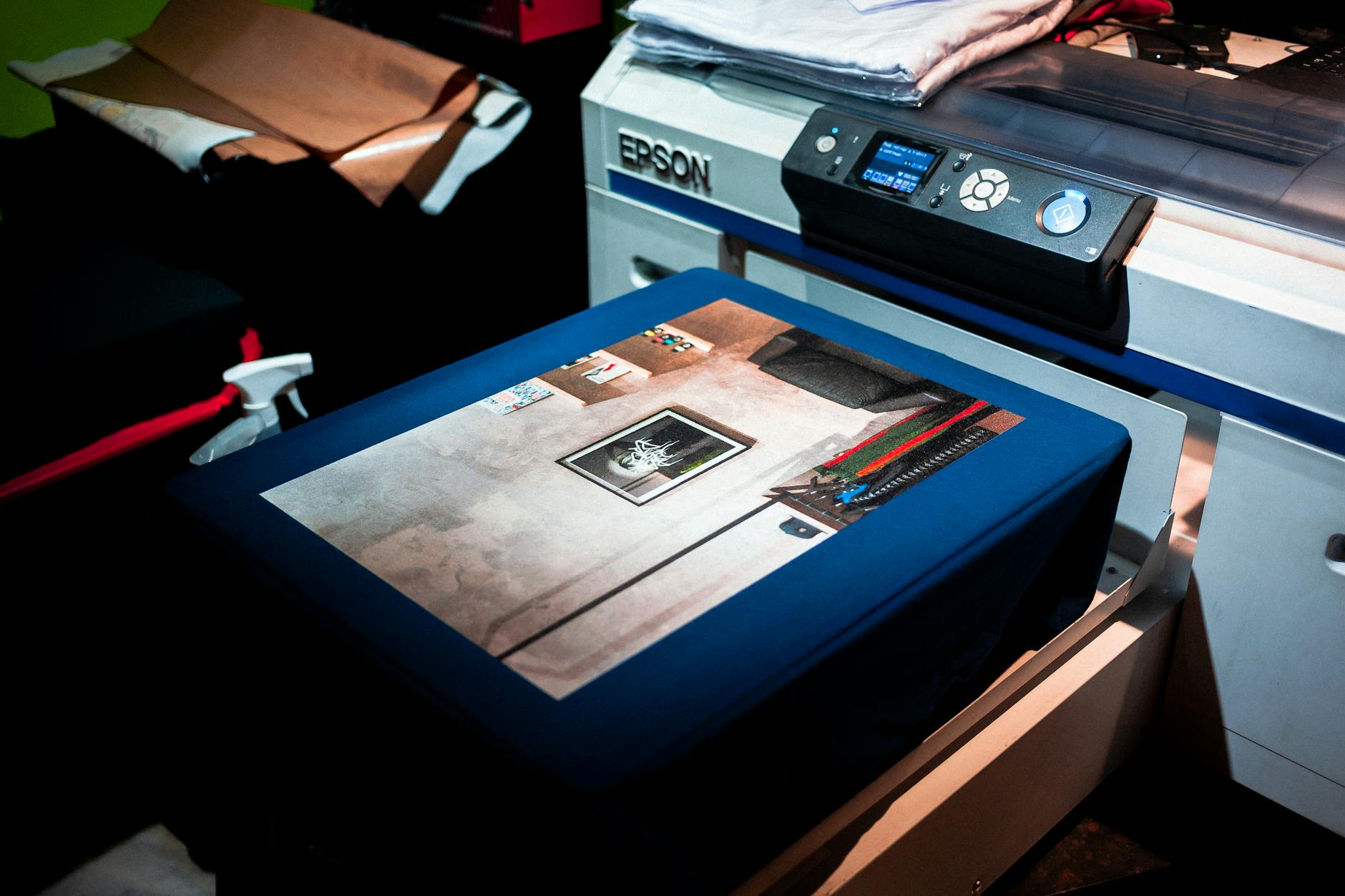
The promotional products industry has never stood still. From hand-stamped leather goods to digitally embroidered polos rolling off automated machinery, the way branded merchandise is produced has always evolved alongside technology. But arguably no shift in recent memory has been as significant — or as far-reaching — as the rise of on-demand printing. For Australian businesses, schools, and event organisers, the on-demand printing impact on the promotional product industry is reshaping how merchandise is ordered, produced, delivered, and even conceptualised. If you haven’t yet felt these changes in your own purchasing decisions, you almost certainly will soon.
What Is On-Demand Printing and Why Does It Matter?
On-demand printing — sometimes called print-on-demand or POD — refers to a model where products are only printed, decorated, or manufactured once an order is placed, rather than being stockpiled in bulk before demand is confirmed. This is a fundamental departure from traditional promotional product manufacturing, which typically relied on large minimum order quantities (MOQs) to make unit costs viable.
Traditional promotional product orders required a business to commit upfront. A Sydney corporate events team planning a conference might need to order 500 branded tote bags just to hit the MOQ threshold, knowing full well they only needed 300. The excess became waste — sitting in storage, becoming obsolete when branding updated, or heading straight to landfill.
On-demand printing flips this model. Products can now be produced in smaller quantities, sometimes as few as one unit, with printing triggered only by confirmed demand. This has massive implications for how organisations think about workplace branded merchandise and its impact on employee engagement, particularly when workforces are distributed or individual personalisation is valued.
The Technology Behind the Shift
The rise of digital printing, UV flatbed printing, direct-to-garment (DTG) technology, and sublimation-on-demand systems has made smaller runs economically feasible in ways that simply weren’t possible a decade ago. Automated setup processes dramatically reduce or even eliminate the labour-intensive plate-making and screen setup that once made short runs prohibitively expensive.
For promotional products specifically, this means that laser engraving for promotional products can now be executed on individual pieces without the setup cost eating into the entire budget. The economics of personalisation have changed entirely.
How On-Demand Printing Is Changing Ordering Behaviour
One of the most observable shifts is the way organisations now approach their promotional merchandise needs. Rather than planning massive annual bulk orders, many Australian businesses and organisations are moving toward a model of ordering smaller quantities more frequently throughout the year.
Smaller Quantities, More Flexibility
For a Brisbane primary school running multiple events across the calendar year — sports day, fundraisers, graduation, orientation — the ability to order manageable quantities of custom merchandise for each occasion is genuinely transformative. Instead of committing to 1,000 units of a generic branded item, they can now order 150 custom t-shirts for sports day, 80 promotional spiral notebooks for an academic awards night, and 60 branded water bottles for a sustainability campaign — each run tailored precisely to the occasion.
This flexibility is equally appealing to corporate procurement teams. A Melbourne-based company rolling out a new team across several states no longer needs to guess at headcounts three months in advance. On-demand production means merchandise can be ordered closer to actual need, reducing waste and improving cash flow.
Personalisation at Scale
The on-demand model has also enabled a level of personalisation that was previously reserved for very high-value items. Individual name customisation, variable messaging, and even product-by-product colour variation are now achievable without astronomical costs.
Consider employee onboarding. Rather than handing every new starter the same generic pack, HR teams can now produce personalised kits — including items like custom webcam covers for employee onboarding printed with an individual’s name or role — at costs that are competitive with bulk generic orders. This level of personal connection strengthens the employee experience from day one.
The On-Demand Printing Impact on Promotional Product Industry Sustainability
Perhaps nowhere is the on-demand printing impact on the promotional product industry more profound than in sustainability outcomes. Overproduction has long been one of the industry’s most uncomfortable open secrets. Excess merchandise produced speculatively or in oversized bulk orders has historically contributed significantly to landfill.
On-demand printing directly addresses this problem. When products are only created after an order is confirmed, the risk of unsold or unused stock is dramatically reduced. For Australian organisations committed to reducing their environmental footprint, this aligns neatly with broader ESG and sustainability goals.
This is particularly relevant for brands already investing in carbon neutral promotional items for eco-conscious brands. The sustainability story of a branded item doesn’t just rest in the materials — it also lives in the production model. A bamboo pen produced on-demand with no overrun waste tells a much stronger sustainability story than the same pen produced in a batch of 5,000 with 2,000 sitting in a warehouse.
Reduced Warehousing and Inventory Burden
On-demand production also significantly reduces the need for branded merchandise warehousing. Historically, large organisations — government departments, universities, major retailers — would hold enormous inventories of branded stock, requiring dedicated storage space, inventory management systems, and periodic write-offs of outdated merchandise.
On-demand models free up capital and physical space. For Perth-based organisations managing branded merchandise in Perth across multiple sites and departments, the ability to produce and dispatch items centrally on a per-order basis is operationally compelling.
Challenges and Considerations for Australian Buyers
The on-demand model is not without its challenges, and Australian buyers should approach it with clear expectations.
Unit Cost vs. Volume Trade-offs
On-demand printing generally carries a higher per-unit cost compared to large-volume bulk orders. For a Melbourne event organiser sourcing promotional yoga mats in Melbourne for a wellness expo, ordering 500 units through traditional bulk production will almost always be cheaper per unit than ordering 50 on-demand.
The smart approach is to evaluate total cost rather than unit cost. Factor in warehousing, waste from overproduction, the cost of obsolescence, and the value of flexibility. For many scenarios, on-demand is more cost-effective in total terms even if the per-unit price looks higher.
Turnaround Times
On-demand production does not always mean fast production. Because items are made after ordering rather than pulled from pre-existing stock, turnaround times can sometimes be longer for complex decoration methods. For time-sensitive campaigns — such as Easter promotional products in Sydney or a surprise staff recognition run — buyers need to plan ahead and confirm lead times with their supplier.
That said, many on-demand platforms and suppliers offer express turnaround options for standard products, especially for items like promotional USB drives or branded stationery where digital printing processes are streamlined.
Quality Consistency
When ordering a single run in one go, quality is controlled within that batch. On-demand ordering — particularly when orders are placed across multiple smaller batches over time — requires close attention to colour consistency, material standards, and print registration. Buyers should always request colour proofs and, where possible, samples before committing to an on-demand supplier for ongoing use.
This is especially important for industries where branding precision matters deeply, such as healthcare or real estate. A clinic relying on branded wellness journals for pharmaceutical companies or a real estate agency ordering branded bottle openers for real estate agents in small batches throughout the year need consistent quality across every run.
On-Demand Printing Across Diverse Australian Markets
The implications of on-demand printing ripple across many sectors and geographies. In regional and remote areas of Australia — including Darwin and the Top End, where access to standard merchandise supply chains can be slower — on-demand models paired with direct shipping create new possibilities for organisations like those sourcing custom merchandise in Northern Territory.
For niche product categories, on-demand is also unlocking new possibilities. Specialised items like branded mosquito net sets for tropical tourism promotions or personalised pet memorial products for veterinary clinics would previously have required significant minimum commitments. On-demand opens these categories to smaller operators who simply couldn’t justify traditional MOQs.
Similarly, branded plaques in Brisbane — traditionally a category requiring careful pre-planning and significant lead times — are increasingly available through laser engraving on-demand services, enabling recognition programmes to be far more responsive and timely.
Small businesses and community organisations are also benefiting. A café wanting branded hand washing reminder signs or a community group ordering branded women’s tote bags no longer needs to absorb the cost of hundreds of units to access professionally decorated merchandise.
What This Means for Your Next Promotional Merchandise Order
For Australian buyers navigating the on-demand landscape in 2026, the practical takeaways are clear. Understanding when on-demand is the right model — and when traditional bulk production still makes sense — is the key to getting maximum value from your branded merchandise budget.
On-demand works best when: personalisation is important, quantities are genuinely uncertain, products have short relevance windows, or sustainability is a priority. Traditional bulk orders still win on per-unit economics when quantities are large and certain, decoration is complex (such as multi-colour screen printing or detailed embroidery on custom made workwear in Australia), and lead times allow for standard production cycles.
The savviest buyers in 2026 are blending both models — using on-demand for personalised, flexible, or niche requirements while maintaining bulk ordering for core, high-volume branded essentials like custom design stubby holders for national campaigns.
Conclusion: Key Takeaways
The on-demand printing impact on the promotional product industry is genuinely reshaping how Australian businesses, schools, government bodies, and organisations approach branded merchandise. From reducing waste to enabling personalisation and unlocking niche product categories, on-demand production represents a meaningful evolution in how promotional products are planned, ordered, and used.
Here are the essential points to carry forward:
- Flexibility over forecasting: On-demand printing reduces the need to predict quantities far in advance, giving buyers more agility and reducing overstock risk.
- Total cost, not unit cost: Higher per-unit pricing in on-demand models is often offset by savings in storage, waste, and obsolescence.
- Sustainability alignment: On-demand production reduces overproduction waste, making it a natural fit for organisations with genuine environmental commitments.
- Personalisation is now accessible: Individual customisation at small quantities is no longer cost-prohibitive, opening powerful engagement opportunities for HR, events, and customer experience teams.
- Blend your approach: The smartest promotional merchandise strategies in 2026 combine on-demand and bulk production models based on the specific needs of each campaign or product category.