
Branded Business Merchandise: A Complete Guide for Australian Organisations
Discover how to choose, order, and maximise branded business merchandise in Australia. Expert tips on products, budgets, and decoration methods.

Written by
Grant Ellison
Corporate Gifts
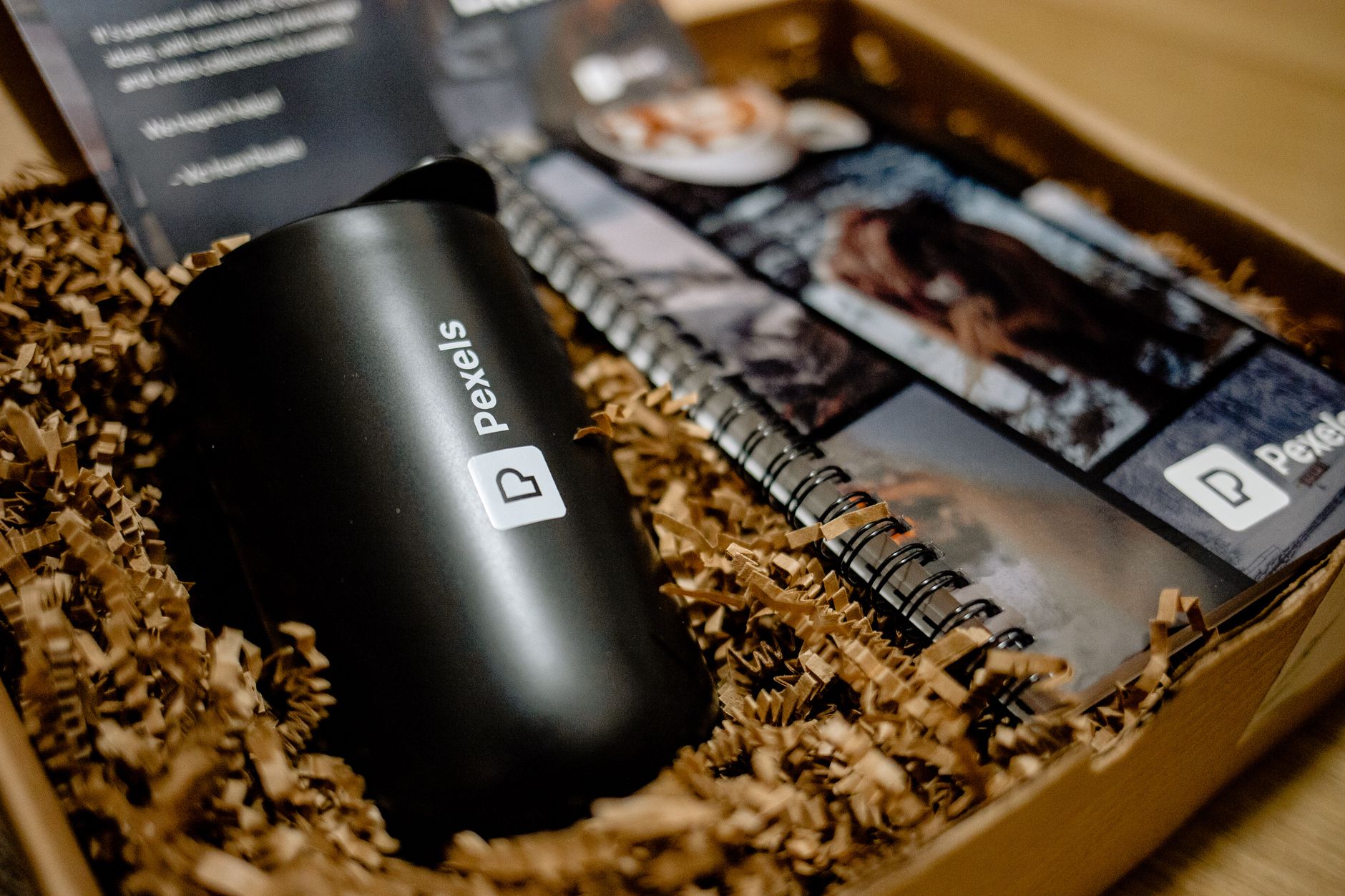
Every Australian business, from a boutique café in Adelaide to a multinational corporation with offices in Sydney and Melbourne, has one thing in common: the need to make a lasting impression. Branded business merchandise is one of the most effective and cost-efficient tools available for doing exactly that. Whether you’re looking to strengthen employee culture, delight clients, or stand out at a trade show, the right branded products can do the heavy lifting that traditional advertising simply can’t. But with hundreds of product categories, decoration methods, and supplier options out there, knowing where to start can feel overwhelming. This guide cuts through the noise and gives you a practical, no-nonsense roadmap for getting your branded merchandise strategy right.
What Is Branded Business Merchandise and Why Does It Matter?
Branded business merchandise refers to any physical product that carries your organisation’s logo, name, tagline, or visual identity. It spans everything from a simple branded pen on a reception desk to a premium insulated water bottle given to a new employee on their first day. What makes merchandise so powerful is its tangibility — unlike a digital ad that disappears in seconds, a well-chosen branded product stays in the hands (and minds) of your audience for months or even years.
Research consistently shows that promotional products generate impressions at a fraction of the cost-per-contact of traditional advertising channels. More importantly, recipients tend to associate positive emotions with the brand that gave them something useful. A Perth-based accounting firm that hands out quality branded notebooks at a client appreciation event isn’t just giving away stationery — it’s reinforcing trust, professionalism, and attention to detail every time that notebook lands on a client’s desk.
The impact extends beyond external audiences too. According to insights explored in our guide on workplace branded merchandise and employee engagement, branded products play a measurable role in boosting morale, fostering team identity, and reducing turnover — especially in competitive industries.
Choosing the Right Products for Your Brand and Audience
Not all merchandise is created equal. The most effective branded products share a few common traits: they’re useful, they’re relevant to the recipient’s lifestyle or work, and they reflect the quality and values of the brand giving them away. Choosing the wrong product — say, a cheap keyring for a premium financial services client — can actually do more harm than good.
Corporate Clients and B2B Relationships
For corporate gifting and client retention, quality counts above all else. Popular choices include:
- Premium drinkware — Insulated bottles and keep cups are perennial favourites. The growth in promotional drinkware demand across Australia shows this category shows no signs of slowing down.
- Tech accessories — Items like branded USB drives are practical, premium-feeling, and universally useful. Our overview of promotional USB drives and pricing is a helpful starting point if you’re budgeting for tech giveaways.
- Branded apparel — Polos, softshells, and branded workwear reinforce brand presence in a visible, long-lasting way. Explore the full range of options in our guide to promotional apparel in Australia.
Events, Conferences, and Trade Shows
Events are where branded merchandise truly earns its keep. Attendees expect takeaways, and the right product can serve as a conversation starter, a brand reminder long after the event ends, and even a social media moment. For seminar and conference planning specifically, our guide to promotional giveaways for seminars in Australia covers what works and what to avoid.
Budget-friendly but effective options for events include branded tote bags, custom notebooks, lanyards, and reusable products. Personalised shopper bags are particularly smart choices — they have high utility, excellent branding real estate, and get used repeatedly in public spaces, multiplying your brand impressions organically.
Schools and Educational Organisations
Schools across Australia — from a Darwin primary school preparing for a sports carnival to a Brisbane secondary college kitting out its leadership team — have unique merchandise needs. Custom t-shirts are an enduring favourite. Understanding sublimation printing on custom t-shirts in Australia can help schools choose the right decoration method for vibrant, full-colour designs that hold up through dozens of washes.
Stationery is another strong category for schools. Promotional spiral notebooks work well for student packs, open day giveaways, and staff recognition gifts.
Understanding Decoration Methods
The decoration method you choose directly affects the look, durability, and cost of your branded merchandise. Getting this right is just as important as product selection.
Screen Printing
Ideal for flat surfaces like t-shirts, tote bags, and cotton caps. Screen printing delivers vivid, cost-effective results at volume. It’s the go-to method for large event runs and school orders. Setup fees apply per colour, so keeping your design to two or three spot colours helps manage costs.
Embroidery
Embroidery adds a premium feel to apparel like polo shirts, beanies, and caps. It’s durable and professional-looking, making it the preferred choice for corporate uniforms and staff merchandise. The trade-off is that fine detail and gradients don’t translate well — clean, simple logos work best.
Laser Engraving
Perfect for hard goods like metal drinkware, keyrings, pens, and awards. Laser engraving produces a precise, permanent result that won’t fade or peel. Items like promotional keyrings are a great example of a product category where engraving adds real perceived value.
Sublimation
Sublimation allows for full-colour, photographic-quality prints on polyester-based products and certain hard goods. It’s ideal for custom sportswear, yoga mats, and branded phone accessories. Check out our breakdown of custom phone cases for a product category where sublimation really shines.
Pad Printing and Digital Printing
Pad printing suits small, curved surfaces like pens and bottle openers. If you’re in real estate and considering products like branded bottle openers, pad printing is typically the most cost-effective and accurate decoration option.
Budgeting for Branded Business Merchandise
One of the most common mistakes organisations make is treating merchandise as an afterthought — setting aside whatever budget remains after other marketing expenses have been allocated. A better approach is to define your goals first, then work backwards to determine what product and quantity tier makes sense.
Here are some broad indicative cost tiers to work with (per unit, inclusive of decoration, at standard order volumes):
- Budget tier ($2–$8 per unit): Pens, keyrings, basic tote bags, hand washing reminder signs — such as branded hand washing reminder signs for cafes
- Mid-range tier ($8–$25 per unit): Notebooks, reusable coffee cups, basic USB drives, cotton caps, lanyards
- Premium tier ($25–$80+ per unit): Insulated bottles, quality backpacks, Titleist golf bags, embroidered polos, tech accessories, premium corporate gifts
Most suppliers in Australia work with minimum order quantities (MOQs). For screen-printed apparel, MOQs typically start around 12–25 units. For embroidered products, MOQs are often lower — sometimes as few as 6 pieces. Hard goods like pens and keyrings often have higher MOQs (50–100 units) but correspondingly lower per-unit costs.
If you’re a smaller organisation or ordering for a niche use case — say, promoting a business in a regional location like Kangaroo Island — it’s worth discussing your needs directly with a supplier to find options that work within your volume requirements.
Eco-Friendly Merchandise: Meeting Modern Expectations
Sustainability is no longer a nice-to-have in branded merchandise — it’s increasingly expected, particularly by Gen Z and millennial audiences, as well as government and education sector clients. Fortunately, the range of quality eco-friendly options has expanded dramatically in recent years.
Our comprehensive guide to reusable branded merchandise in Australia is worth bookmarking if sustainability is a priority for your organisation. From bamboo pens to recycled PET tote bags, the eco-friendly category now offers genuinely premium products that rival their conventional counterparts in both quality and appearance.
For retail businesses in particular, recycled paper branded shopping bags strike the perfect balance between sustainability credentials and cost-effective branding.
Practical Tips for Ordering Branded Business Merchandise
Before placing your order, keep these practical considerations in mind:
Artwork preparation: Supply your logo as a vector file (AI, EPS, or high-resolution PDF). Raster images (JPGs, PNGs) often don’t scale cleanly and can delay your order or reduce print quality.
Allow adequate lead time: Standard turnaround in Australia is typically 10–15 business days from artwork approval. Rush services are available but attract premium pricing. If you’re ordering for a fixed event date, build in at least an extra week as a buffer.
Request a sample: For large orders or premium products, always request a pre-production sample before committing to the full run. The cost is usually modest relative to the risk of an unsatisfactory outcome.
Consider the full recipient experience: Think about how products will be presented — a branded box, tissue paper, or personalised note card can elevate a good gift into a memorable one.
Don’t overlook niche audiences: Unique sectors have unique needs. Custom branded yoga mats might seem unusual, but for a wellness brand or a corporate wellbeing programme, they’re precisely on-brand. Similarly, personalised pet memorial products are a highly specific example of how branded merchandise can serve very targeted emotional and professional purposes.
Also worth exploring is the category of branded women’s tote bags, which have proven particularly effective for retail, wellness, and lifestyle brands looking for stylish, functional products with broad appeal.
Conclusion: Getting Your Branded Business Merchandise Strategy Right
Branded business merchandise is far more than a marketing expense — it’s a tangible expression of your brand, your values, and your relationship with the people who matter most to your organisation. When chosen thoughtfully and executed with quality, it delivers impressions, builds loyalty, and reinforces your identity in ways that digital channels simply cannot replicate.
Here are the key takeaways to guide your next merchandise project:
- Match the product to the audience — relevance and utility drive results far more than novelty or price
- Choose your decoration method carefully — embroidery, screen printing, laser engraving, and sublimation each have different strengths depending on the product and design
- Set a realistic budget early — knowing your per-unit spend and MOQ requirements upfront avoids costly surprises
- Prioritise sustainability where possible — eco-friendly options are now genuinely high quality and increasingly expected by recipients
- Plan ahead — allow adequate lead time, prepare vector artwork, and always approve a proof before the full production run begins
Whether you’re a Gold Coast real estate agency, a Hobart university, a Melbourne corporate looking to reward a high-performing team, or a Canberra government department planning a conference, branded business merchandise done right is one of the smartest investments you can make in your brand.